Main Causes of Fires in Automated Vertical Warehouses
Automated vertical warehouses are essential for modern logistics, retail operations, and high-density storage environments. Their compact structure and reliance on automation also make them susceptible to specific fire risks. Understanding the main causes of fires in vertical automated warehouses helps improve safety strategies and ensures better protection for goods, equipment, and personnel. Firecom provides advanced aerosol suppression technology designed specifically for these systems.
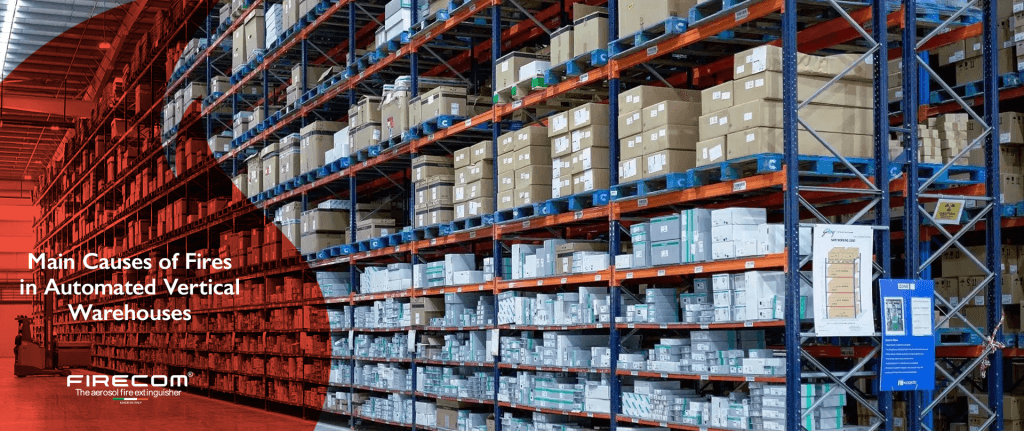
What are the main causes of fires in Automated Vertical Warehouses?
1. Electrical Malfunctions
Short Circuits and System Failures
Vertical lift modules and automated storage systems operate through motors, sensors, control panels, and electrical components. Faulty wiring, overloaded circuits, or equipment malfunctions can lead to short circuits—one of the most frequent ignition sources in vertical warehouses.
Risk Amplified by Compact Design
Due to the enclosed structure of these systems, even small electrical sparks can quickly escalate if not immediately controlled.
2. Combustible Materials
High Flammability Inside Storage Units
Vertical warehouses often contain:
- Packaging materials
- Plastics
- Paper
- Textiles
- Cardboard
When stored incorrectly or exposed to heat sources, these materials significantly increase fire risk.
3. Chemical Reactions
If incompatible chemicals, detergents, or maintenance substances are stored too close together, they may react or release heat. In a confined vertical storage unit, a minor chemical reaction can quickly trigger ignition.
4. Heating and Cooling System Failures
HVAC systems regulate temperature within warehouses, but faults such as:
- Overheating components
- Blocked ventilation
- Faulty thermostats
Can create ignition points near storage machinery or materials.
5. Arson or Human Negligence
As with all warehouse environments, intentional fires or negligent behavior—improper tool use, open flames, or unsafe handling—represent additional risks.
Firecom Protection for Vertical Automated Warehouses
Firecom has developed an advanced aerosol suppression system specifically suited for vertical storage units. Its benefits include:
- Fast extinguishing action without harm to people or goods
- Clean, non-toxic aerosol agent
- Modular technology that does not restrict movement
- No disruption to warehouse workflow
- No interruption to building operations
This ensures complete, safe protection for automated vertical warehouses without compromising efficiency or logistics.
Conclusion
Vertical automated warehouses face unique fire risks due to electrical equipment, combustible materials, chemical interactions, and HVAC failures. While prevention is essential, choosing a specialized fire suppression system provides true security.
Firecom’s aerosol technology ensures reliable, fast, and safe protection tailored to the structure and operation of modern vertical storage systems
