What ISO 3941:2026 Changes for BESS Fire Protection
The publication of ISO 3941:2026 marks a turning point in global fire safety standards.
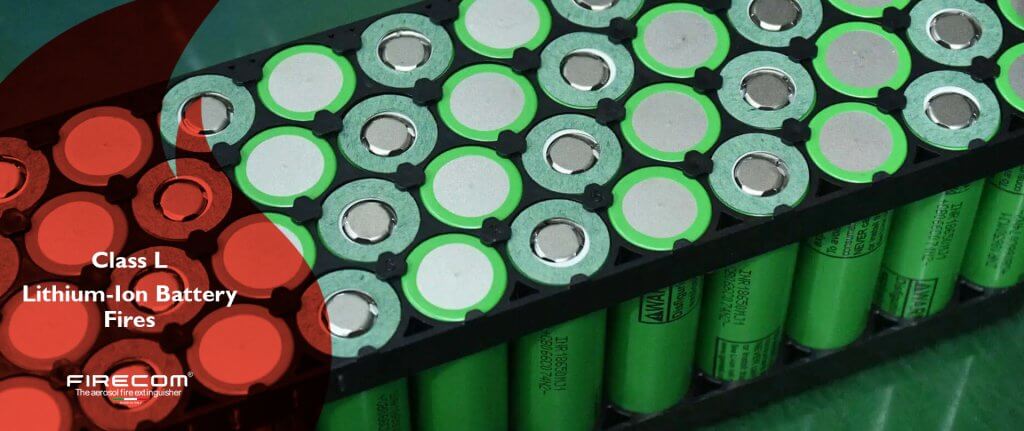
For the first time, a Class L lithium-ion battery fire is officially recognized as a standalone fire category.
Lithium-ion battery fires are no longer classified under traditional Class A or Class B fires.
They now belong to Class L, a dedicated classification that acknowledges the specific and complex nature of lithium-ion battery fire risk.
This update has major implications for BESS fire protection, UPS installations, electric mobility infrastructure, and industrial energy storage systems.
Why Lithium-Ion Battery Fires Require a Dedicated Class L Classification
A lithium-ion battery fire behaves very differently from conventional combustible or flammable liquid fires.
The introduction of Class L fire classification was necessary because lithium battery fire risk includes:
- High energy density → extremely rapid heat release rate (HRR)
- Thermal runaway fire propagation (cell-to-cell escalation)
- Emission of flammable and toxic gases
- Risk of explosion from confined gas accumulation
- Residual electrical energy → delayed re-ignition
- Limited accessibility for fire suppression intervention
A lithium-ion battery fire is not just a thermal combustion event.
It is an electrochemical chain reaction, structurally dynamic and capable of reignition even after initial suppression.
This makes traditional fire classification frameworks insufficient.
Impact of ISO 3941:2026 on BESS Fire Protection
The growth of Battery Energy Storage Systems (BESS) has significantly increased the relevance of lithium-ion battery fire protection.
In containerized BESS installations, the most critical fire safety challenges include:
- Rack-to-rack fire propagation
- Thermal runaway escalation across modules
- Confined explosion risk
- Post-suppression re-ignition
With the introduction of Class L lithium-ion battery fire, risk assessment methodologies must evolve.
What changes for BESS operators?
- Lithium-ion batteries must be considered a primary fire hazard
- Fire detection and fire suppression systems must be designed specifically for thermal runaway risk
- Existing installations may require compliance review
- Insurance underwriting criteria will likely tighten for energy storage fire safety
Lithium-Ion Battery Fire Suppression Systems: A New Engineering Approach
The recognition of Class L fire implies that traditional suppression logic may not be sufficient in high-energy environments.
Effective lithium battery fire suppression systems must address:
- Early detection of thermal runaway
- Rapid suppression response time
- Gas management considerations
- Compartment structural design
- Post-activation safety conditions
Fire safety engineering in BESS environments must now integrate:
- Detection system architecture
- Suppression system performance
- Compartment integrity
- Ventilation and explosion mitigation strategies
The Role of Certification in Class L Fire Protection
Although ISO 3941:2026 establishes the Class L lithium-ion battery fire classification, standardized testing methodologies for fixed systems are still evolving.
However, advanced technical certification protocols already exist as reference benchmarks for energy storage fire safety.
Firecom operates in compliance with European standards for condensed aerosol generators, including EN 15276-1, and is actively involved in high thermal load application environments.
Firecom and Voluntary Certification with KIWA
We are already engaging with KIWA to pursue a voluntary certification pathway aligned with protocols such as KIWA K21045-SCP05.
This certification program evaluates:
- Fire suppression performance in lithium-ion battery scenarios
- Integration with fire detection systems
- Engineering and system design
- Compartment structural configuration
- Post-activation safety and risk control
This proactive approach ensures that Firecom solutions are aligned with the evolving Class L lithium-ion battery fire protection framework.
Class L Lithium-Ion Battery Fire: What It Means for the Industry
The introduction of Class L fire classification represents more than a regulatory update.
It signals:
- A structural change in energy storage fire safety
- A shift in how lithium-ion battery fire risk is assessed
- A new engineering paradigm for BESS fire protection
- A more rigorous insurance and compliance landscape
As electrification accelerates globally, lithium-ion battery fire risk management becomes a strategic priority.
Conclusion
If you operate in the BESS, UPS, industrial energy storage, or electrified infrastructure sector, understanding the impact of Class L classification on your fire protection strategy is now essential.
Contact Firecom’s technical team to assess your lithium-ion battery fire protection approach and ensure compliance with the evolving Class L framework.
