Main Causes of Fires in Generators
Generators and power equipment are critical for operations but are exposed to multiple fire risks. Understanding the main causes of generator fires is essential to protect people, machinery, and the environment. Firecom aerosol fire suppression systems provide fast, effective, and safe protection for generators and motor rooms.
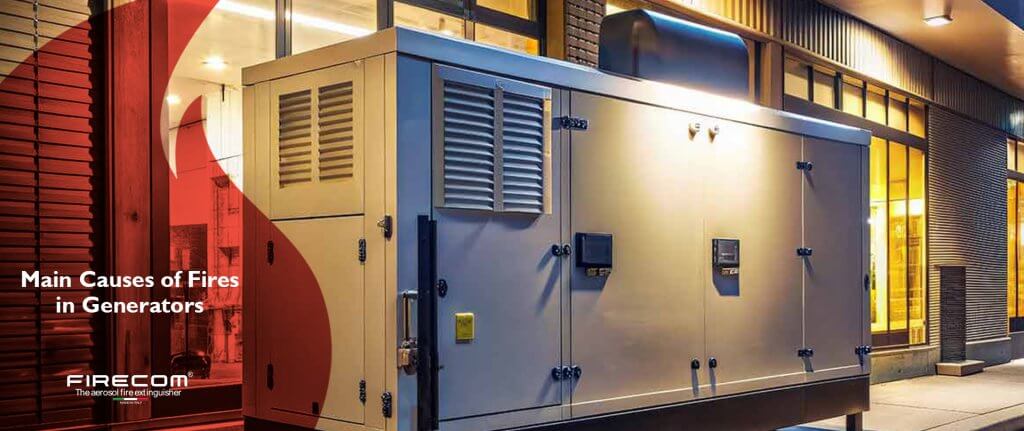
What Are The Main Causes of Fires in Generators ?
1. Engine Malfunctions
Mechanical or electrical faults in the generator engine can generate heat, sparks, or flames, which can quickly ignite surrounding materials. Proper monitoring is essential to prevent fires.
2. Low-Quality Fuel
Using substandard or contaminated fuel can increase the risk of combustion and fire incidents in generators, leading to equipment damage or hazardous situations.
3. Overheating of Electrical Components
Electrical components can overheat due to overloads, short circuits, or insufficient cooling. Overheating is a primary cause of generator fires and requires rapid suppression.
4. Debris and Dust Accumulation
Accumulated dust, dirt, or debris inside generator rooms can cause short circuits and provide fuel for fire. Regular cleaning and monitoring reduce these risks.
5. Human Error
Improper operation or maintenance mistakes, such as incorrect connections or fuel handling, can trigger fires. Fire prevention protocols and specialized suppression systems are critical.
Firecom Protection for Generators
Firecom aerosol systems are designed to protect generators, motor rooms, and machinery while ensuring safety for personnel and the environment. The system provides rapid suppression, non-toxic and eco-friendly protection, minimizing damage and maintaining operational continuity.
Conclusion
Generator fires often stem from engine malfunctions, low-quality fuel, overheating, debris, or human error.
Firecom aerosol fire systems deliver fast, safe, and environmentally friendly protection, safeguarding people, equipment, and facilities.
