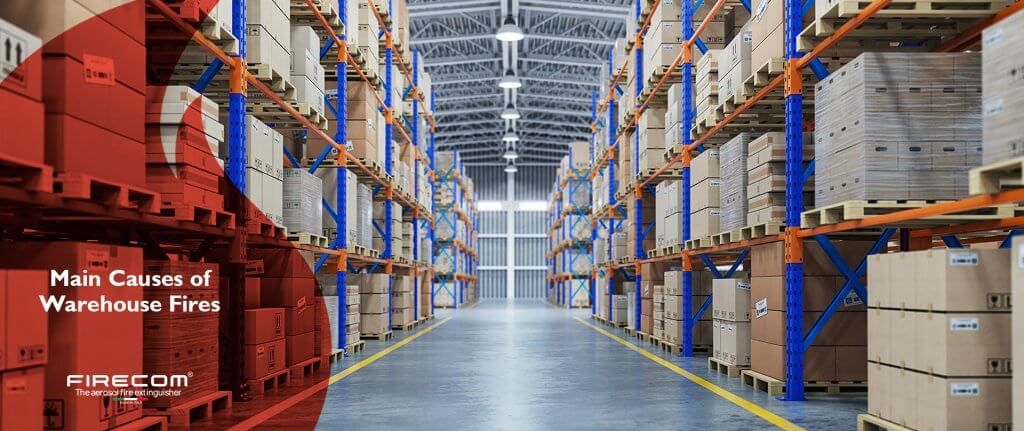
Main Causes of Warehouse Fires
Warehouse environments contain equipment, vehicles, chemicals, and large volumes of stored materials. All these elements can become ignition sources if not managed correctly. Understanding the most common causes of warehouse fires is essential to improve safety, reduce risks, and protect people and assets. Firecom’s aerosol fire suppression systems provide reliable protection for storage facilities of all types.
1. Intentional Fires
Arson is one of the most frequent causes of warehouse fires. Intentional ignition may occur due to vandalism, theft attempts, or malicious behavior. These events highlight the importance of surveillance systems, access control, and rapid fire detection.
2. Short Circuits and Malfunctions
Faulty electrical installations, overloaded circuits, damaged wiring, or malfunctioning machines can easily trigger a fire.
Warehouses often operate with numerous systems—lighting, automation, conveyor belts—making electrical issues a common hazard.
3. Forklifts and Industrial Vehicles
Forklifts can ignite fires in several situations:
- Poor maintenance of the engine or battery
- Fuel leaks
- Overheating components
- Improper use or storage
Given their constant presence in warehouses, forklift safety is essential for fire prevention.
4. Chemical Reactions
Many warehouses store chemicals or substances that may react dangerously when improperly handled. Mixing incompatible materials, accidental leaks, or poor ventilation can rapidly cause ignition.
5. Combustible Materials
Most warehouses contain cardboard, wood, packaging, plastics, and other combustibles. When stored incorrectly or exposed to heat sources, these materials significantly increase the fire risk.
6. Heating and Cooling Systems
HVAC system failures—such as overheating components, blocked ventilation, or faulty thermostats—can lead to fires. Routine maintenance is essential to avoid ignition caused by heating or cooling equipment.
7. Welding and Cutting Activities
Welding, grinding, and metal-cutting operations produce sparks and high temperatures. If performed near combustible materials, these activities can easily start a fire without proper safety protocols.
Conclusion
Warehouses face numerous potential fire risks, from electrical faults to chemical reactions and equipment failures. A reliable and fast-acting fire suppression solution is essential to safeguard goods, machinery, and personnel.
Firecom’s aerosol fire suppression systems provide clean, safe, and highly effective protection, making them ideal for modern storage facilities that require maximum safety with minimal disruption.
